


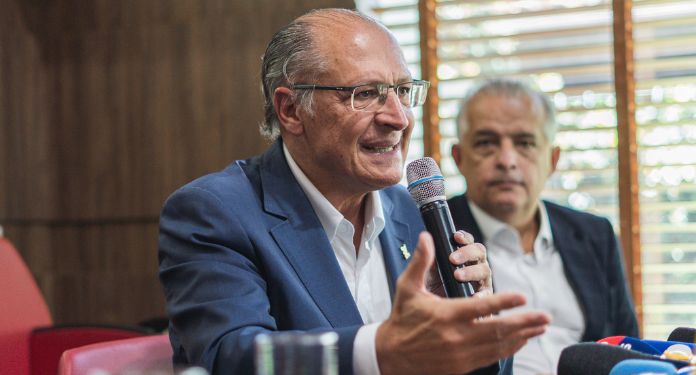
In recent days, a controversy has emerged in the Brazilian economic scenario. The Ministry of Development, Industry, Commerce and Services, led by Geraldo Alckmin, released a study on sports betting.
This report denies claims that the increase in online gaming was directly linked to family debt and, mainly, the decline in retail.
sports betting numbers
The AGU (Attorney General of the Union) asked the government to create a position on betting, amid a dispute in the STF (Supreme Federal Court). The CNC (National Confederation of Commerce in Goods, Services and Tourism) took the initiative to question the legality of betting in Brazil.
According to the entity, the growth of online betting is leading to household debt and harming the domestic economy.

But, in a technical note, the ministry states that the available data does not indicate a slowdown in retail. According to IBGE (Brazilian Institute of Geography and Statistics), sales in the sector registered considerable growth:
- Increase of 0.6% from June to July 2024
- Accumulated growth of 5.3% in the 1st half of 2024
- 3.7% increase from July 2023 to July 2024
In contrast, the CNC reiterates that the retail sector’s growth forecast for 2024 has been revised downwards, from 2.2% to 2.1%. The entity argues that this change was influenced by the “uncontrolled increase in online betting”, which raises more questions about the connection between betting and the economic situation.
The ministry, although it does not deny the potential impact of betting, considers it inappropriate to attribute the variation in retail results exclusively to spending on online betting.
Study on BC sports betting causes controversy
This analysis is reinforced by a challenge to data presented by the Central Bank (BC), which claimed that Bolsa Família beneficiaries had transferred R$3 billion to bets in August.
The study presented by the BC caused significant resonance in the government, the retail sector and political spheres. The document indicated that the monthly amounts transferred for betting varied between R$18 billion and R$21 billion throughout the year.
However, the ministry refutes these conclusions, arguing that the numbers presented are crude and do not take into account the prizes that return to bettors.
The study was also challenged by ANJL (National Association of Games and Lotteries) and highlighted “serious mistakes” in the information about the expenses of Bolsa Família beneficiaries on sports betting.
With growing concern about the methodology used in the Central Bank study, the government found itself grappling with a lack of clarity regarding the data. The ministry led by Alckmin emphasizes that, to better understand the impact of betting on the economy, a more comprehensive analysis would be necessary that would take into account various economic factors.
Folha de São Paulo reported that there were significant gaps in the BC data and that members of the Ministry of Finance were awaiting clarification on the methodology.
Stable numbers
The Ministry of Development, based on data from the BC, indicated stability in family debt. Debt, in relation to accumulated income, fell from 48.25% in August 2023 to 47.93% in July 2024, showing a slight improvement.
Therefore, the technical note, prepared by the General Coordination of Sector Institutional Coordination of the Ministry, guarantees that the topic will continue to be closely monitored. The department is committed to analyzing the effects of betting on retail and the economy as a whole.