


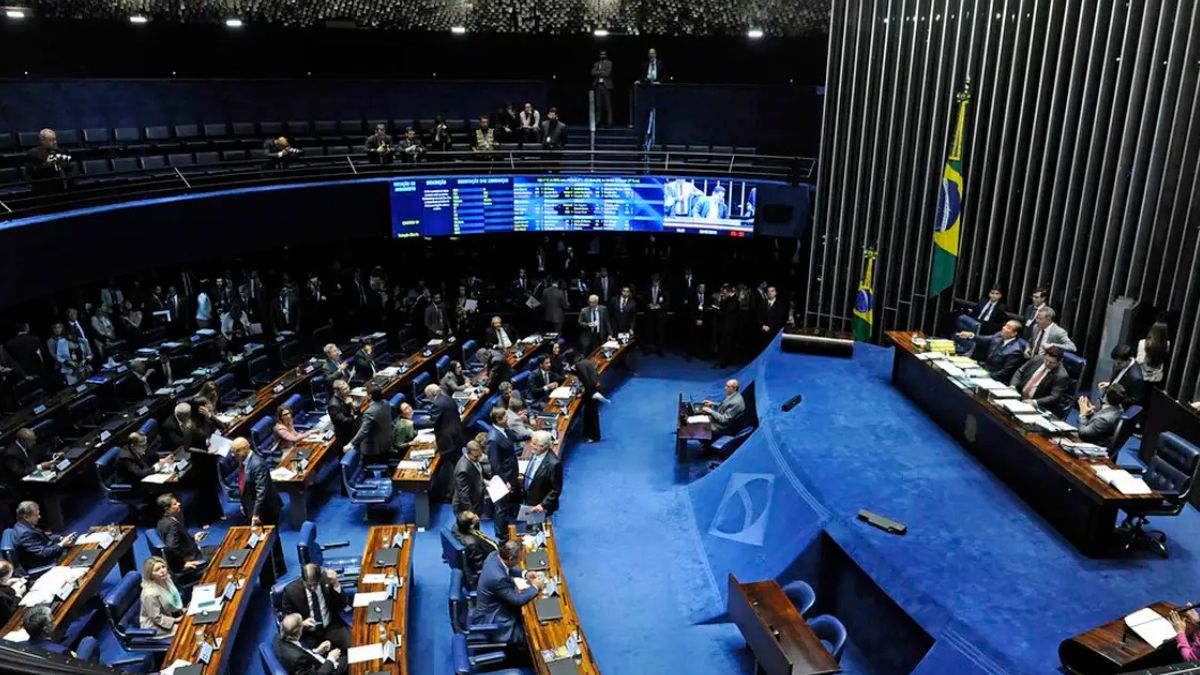
The proposal to change the taxation of betting sites, financial technology companies (fintechs), and banks will need to be voted on in the plenary session of the Federal Senate.
Senator Carlos Portinho (PL-RJ), the party leader, filed an appeal, supported by 18 other parliamentarians, to bring the bill to the plenary. The measure could generate R$ 3.99 billion in revenue for public coffers in 2025, according to projections from the economic team.
The project was undergoing final review in the CAE (Committee on Economic Affairs). However, the internal regulations allow for an appeal signed by one-tenth of the senators to submit the matter to the plenary. If the parliamentarians approve the text, the proposal will proceed to the Chamber of Representatives for analysis.
What will the new taxation of online betting look like?
Initially, the government estimated it would raise R$ 4.98 billion with the proposal. The forecast fell after rapporteur Eduardo Braga (MDB-AM) proposed tiered tax rates in the report approved by the committee.
The first version established an increase in the taxation of bets from 12% to 24%, a percentage higher than the 18% intended by the government through Provisional Measure 1,303. This Provisional Measure lost validity due to lack of support in the Chamber of Deputies and also included a tax on financial investments.
Thus, the new model establishes a gradual increase from 12% to 18%. During 2026 and 2027, the rate will reach 15%. Subsequently, in 2028, the percentage will reach 18%.
Escalation hits fintech companies.
The senator adopted a similar strategy to increase the CSLL (Social Contribution on Net Profit) for fintechs. The rate will increase from 9% to 15% progressively. In 2026 and 2027, the percentage will be 12%. From 2028 onwards, it will rise to 15%.
Banks face differentiated tax increases.
Banking institutions, which currently pay 15% CSLL (Social Contribution on Net Profit), will see increases in two stages. In 2026, the rate will rise to 17.5%. From 2028 onwards, the percentage will reach 20%.
Furthermore, the 20% tax rate, previously restricted to banks, will now include credit, financing, and investment companies, as well as capitalization companies. Finally, the rapporteur proposed raising the tax rate on the distribution of JCP (Interest on Equity) from 15% to 17.5%.