


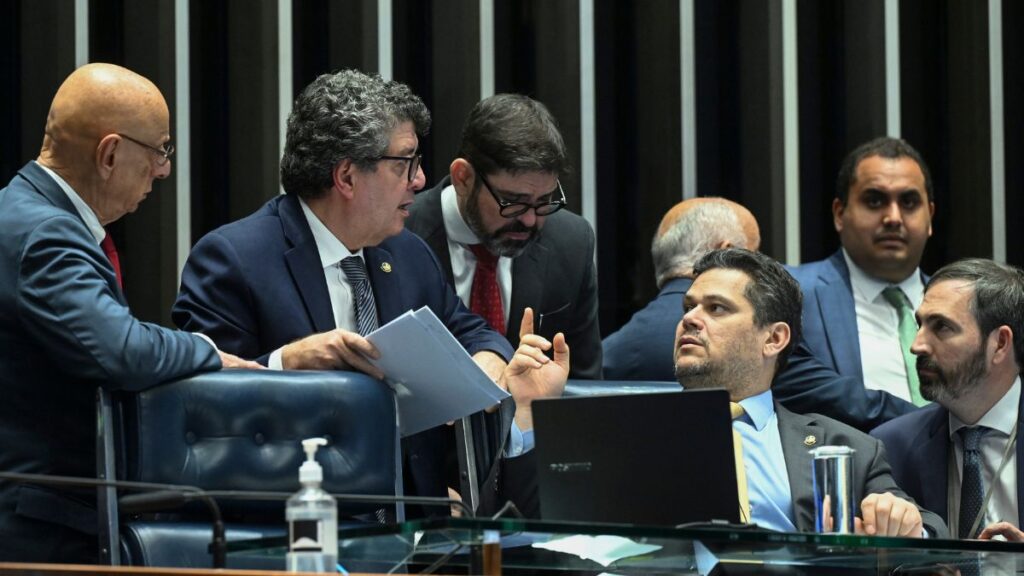
The Senate is due to vote this Wednesday (17) on the bill that reduces part of the tax incentives by 10%. The proposal also foresees an increase in taxation on bets, fintechs and Interest on Equity (JCP). The text guarantees R$ 20 billion for the 2026 Budget.
The Chamber of Representatives approved the matter in the early hours of Wednesday with 310 votes in favor and 88 against. The Speaker of the House, Hugo Motta (Republicanos-PB), said: “President (Davi) Alcolumbre informed me that this item should be the first on the agenda for tomorrow’s session at 4 pm.”
How will the changes to taxes and revenue collection affect us?
The rapporteur, Aguinaldo Ribeiro (PP-PB), included measures to increase taxes in order to ensure the estimated revenue for 2026. In this sense, the plenary validated the text after intense negotiation by the government to balance the budget accounts.
The final version altered the cut in benefits granted to companies based on presumed profit. The original proposal affected companies with annual revenue above R$ 1.2 million and generated concern among parliamentarians.
However, the new text establishes a ceiling of R$ 5 million. Ribeiro points out that the impact of the cuts falls from R$ 19.9 billion to R$ 17.5 billion with this change.
New tax rates for the financial and betting sectors.
The tax on gross revenue from betting companies will increase from the current 12% to 15%. Therefore, the increase will be linear, at a rate of 1 percentage point per year until 2028.
The text raises the tax rate for fintechs subject to the 9% Social Contribution on Net Profit (CSLL) to 12% next year. Furthermore, the rate will reach 15% starting in 2028. Larger fintechs will see their rates increase from 15% to 17.5% in 2026 and reach 20% in 2028.
Taxation on the distribution of interest on equity (JCP) increases from 15% to 17.5%. The financial sector primarily uses this mechanism to distribute profits to shareholders.
Consequently, banks and fintech companies will be held liable for taxes on illegal betting if they allow transactions related to it. Liability also extends to those who advertise for unauthorized companies.
Rules for linear cutting and revision.
The government will implement the 10% cut in tax benefits as early as next year if the Senate approves the bill now. On the other hand, the measure does not affect constitutional incentives such as the Manaus Free Trade Zone.
The law also establishes a mandatory review of benefits every five years, contingent on performance targets.
Political coordination and fiscal targets
The presentation of the text occurred after intense negotiations by the government to seek approval in the National Congress. President Luiz Inácio Lula da Silva called Hugo Motta, and Minister Fernando Haddad met with leaders. In this way, the economic team is trying to get the budget voted on this week before the parliamentary recess.
Negotiations have progressed to reduce points in the original proposal and compensate with taxation of betting and fintech companies. Fernando Haddad said: “The amount of resources needed to finalize the budget is around R$ 20 billion.”
The project guarantees resources to reach the target of a 0.25% surplus of the Gross Domestic Product (GDP), approximately R$ 34 billion. Furthermore, the government used the risk of cuts to parliamentary amendments to convince the deputies. The lack of these resources would greatly increase the risk of spending cuts at the beginning of the year.