


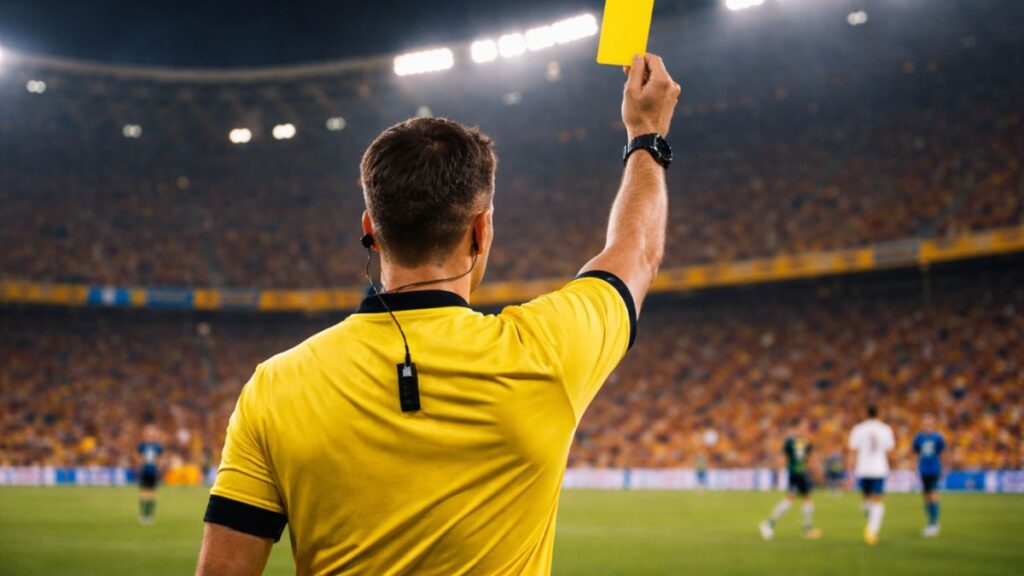
A referee from the first division of football in Russia was detained last Friday (6) after accusations of match-fixing. The investigation points to suspicion of favoritism for Khimki in a national championship match against Alania Vladikavkaz.
According to the Russian Interior Ministry, judge Andrei Fisenko would have received around two million rubles. The amount would have been intended to influence the result of the match being investigated.
How the suspected manipulation occurred in the investigated match
According to Russian authorities, an intermediary responsible for the negotiation was also arrested during the operation. Furthermore, investigators state that the investigation confirmed signs of manipulation in the confrontation.
The match took place on November 20, 2023. On that occasion, Khimki beat Alania by the score of 4-1.


Later, the police reported that directors of the Moscow club also appear in the investigated scheme. According to the investigation, the group would have articulated the action to guarantee a favorable result.
Still, the case remains under analysis by authorities. Meanwhile, the Russian government officially confirmed the existence of the investigation into the episode.
Similar cases expand investigations into match-fixing in football
On the other hand, recent investigations in other countries also point to suspicions involving arbitration and sports betting. One example occurred in Türkiye, where authorities arrested officials and referees following complaints linked to manipulation.
The Turkish Attorney General’s Office confirmed the preventive detention of 21 people. Among those investigated were Murat Ozkaya, president of Eyüpspor, as well as 17 referees.
Furthermore, Fatih Sarac, former owner of Kasimpasa, also had an arrest warrant issued during the investigation. The authorities requested your presence to provide clarification on the case.
At the same time, investigations advanced following complaints filed by the Turkish Football Federation. The entity decided to suspend 149 referees and assistants linked to the country’s professional competitions.
In this way, investigators began to analyze financial movements and possible links with betting platforms. Finally, the data collected indicated that hundreds of referees had accounts with online betting services, while some of them placed frequent bets.