


Casino lobbies across Latin America may appear similar at first glance, but a deeper look reveals that they operate under entirely different logics.
According to new data from Blask, all five main players in the region (Mexico, Brazil, Argentina, Chile and Peru) share a common layer: Pragmatic Play consistently dominates the 30 most distributed titles, occupying up to 16 positions in each market.
But everything beyond that baseline tells a different story.
What the data reveals about player behavior in Latin America
Crash games are concentrated in Brazil, but not elsewhere
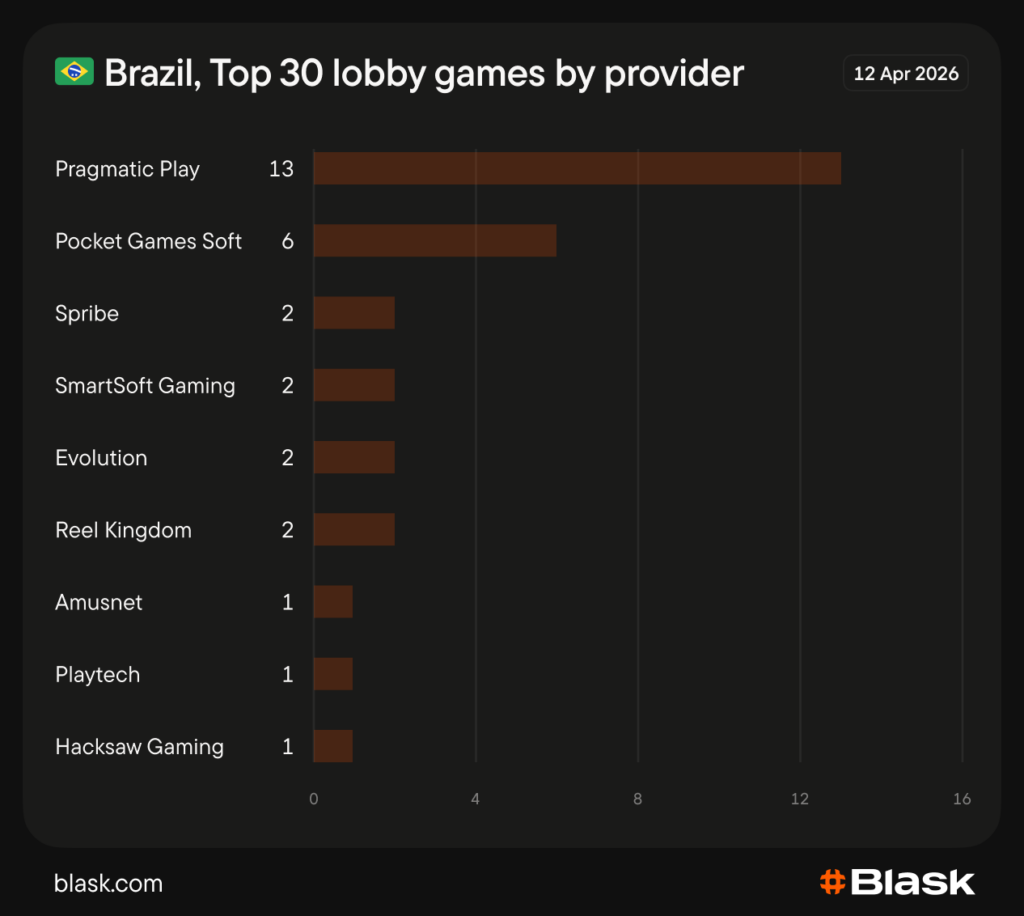
Brazil is the only market where crash-style mechanics achieve consistent visibility at the lobby level.
Titles like Aviator and JetX feature in the top 30, while similar formats are largely absent from the other four markets.
At the same time, Brazil is the only country where a second provider, Pocket Games Soft, guarantees a significant share of distribution, driven entirely by its Fortune series.
This double pattern suggests a highly specific local demand profile rather than a regional trend.

Mexico operates with a stricter playbook
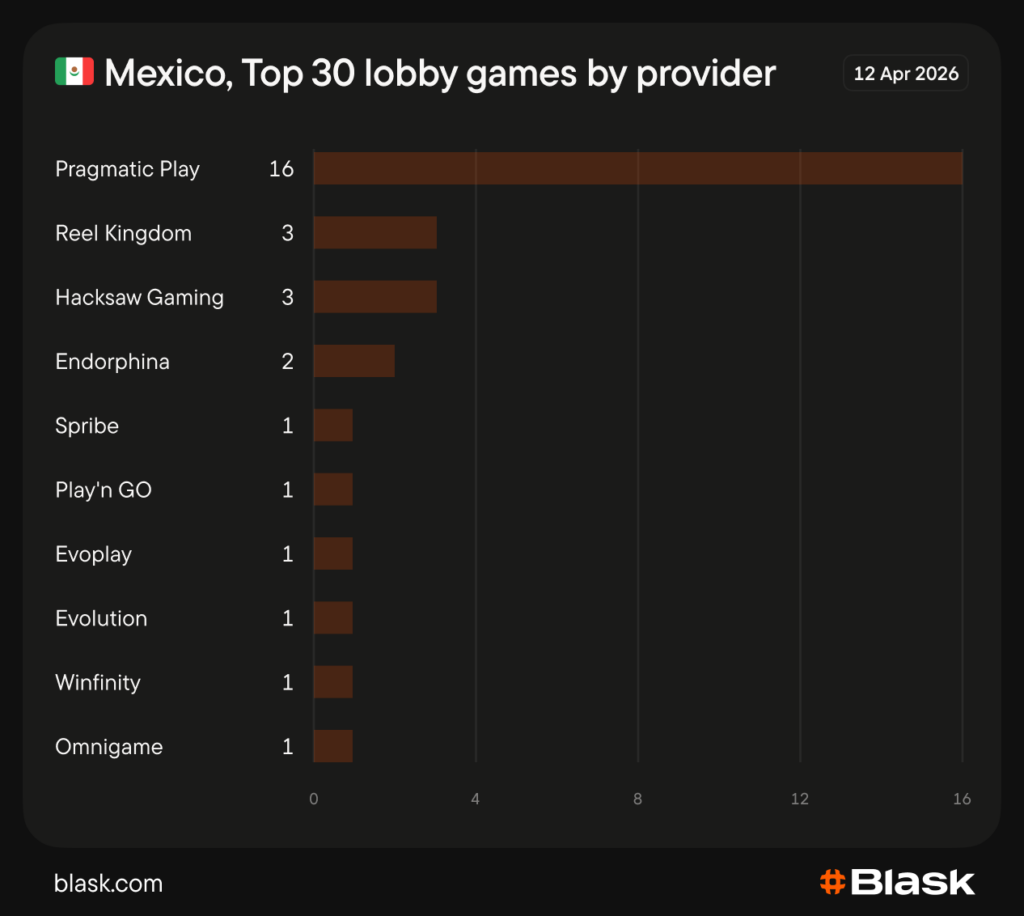
While Brazil expands, Mexico narrows.
The market features the highest concentration of Pragmatic Play titles and one of the most limited secondary tiers.
At the same time, it introduces isolated signals that do not scale regionally, such as the presence of Endorphina, which appears in the Mexican top 30 but nowhere else in the dataset.
Argentina breaks the pattern entirely
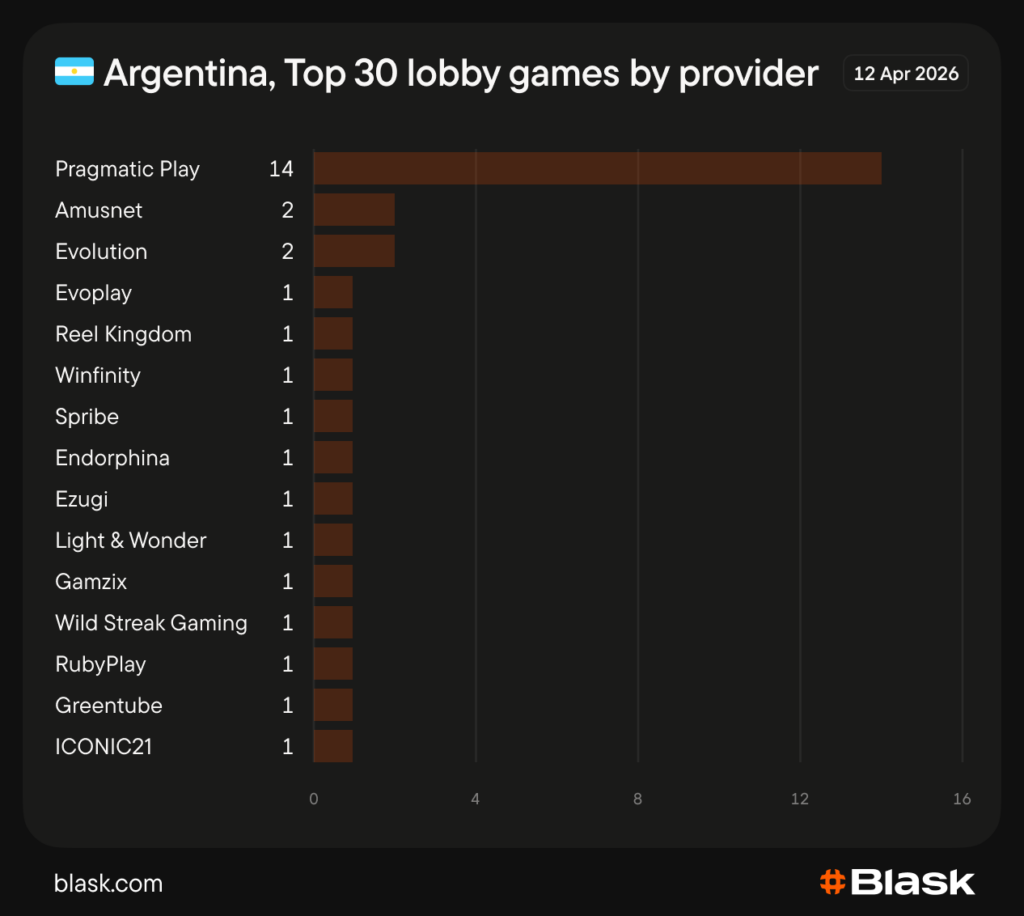
Argentina stands out as the most fragmented market in the region.
Their top 30 includes 15 different providers, which is more than any other country analyzed.
Unlike neighboring markets, where a handful of providers dominate, Argentina distributes visibility across a wide range of studios, particularly in the live casino and table gaming segments.
The result is a lobbying structure that resists standardization
Chile shows how a single game can beat the system
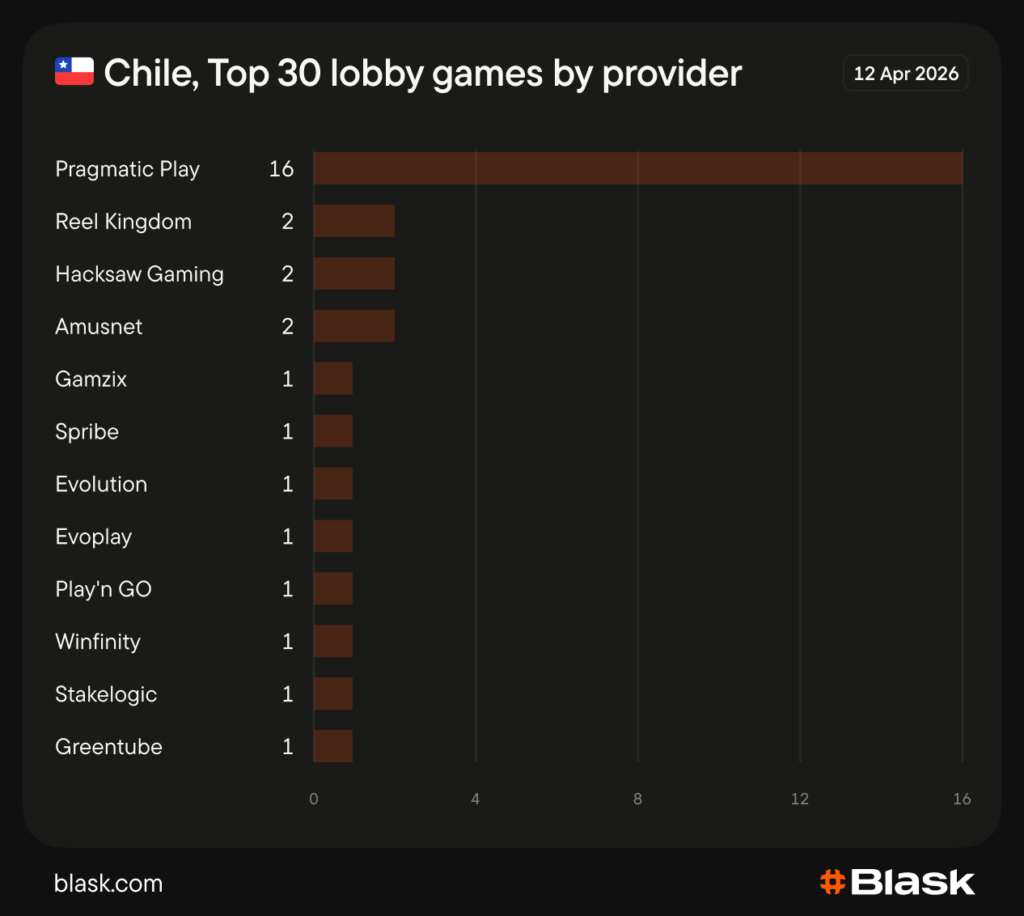
Chile closely mirrors Mexico in general structure, but with one key exception.
A single non-Pragmatic title achieves near-ubiquitous placement in operator lobbies, making it one of the strongest outliers in the entire data set.
This suggests that even in highly concentrated markets, individual titles can stand out if they exactly match local demand.
Peru extends the range more than any other
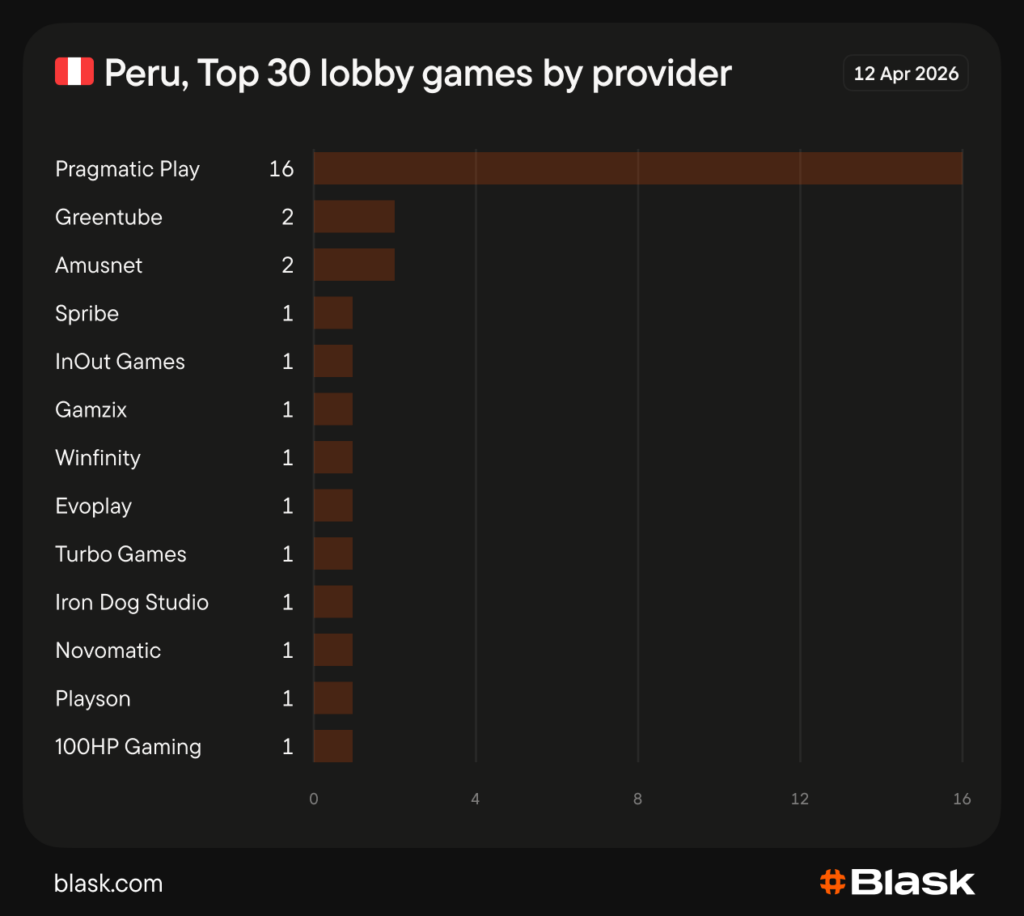
Peru takes the opposite approach to Mexico.
While it maintains the same baseline as Pragmatic, it distributes the remaining positions among 12 different providers, many of which do not appear in any other Latin American market analyzed.
This includes both niche studios and traditional European brands such as Novomatic, pointing to a mix of underserved demand segments and alternative content sourcing strategies.
One region, no single manual
The main conclusion of the analysis is simple: Latin America is not a unified market when it comes to content distribution.
The same providers appear everywhere, but the way their games are positioned, combined and complemented varies drastically from country to country.
For operators, this means that copying the structure of a successful lobby from one market to another is unlikely to work.
Beyond the dominant layer, performance is not defined by regional trends, but rather by local player behavior and demand signals.