


The Commodity Futures Trading Commission (CFTC) presented its first formal proposal to define criteria for the functioning of prediction markets in the United States. The initiative seeks to establish which event contracts can operate legally and which should be prohibited by federal law.
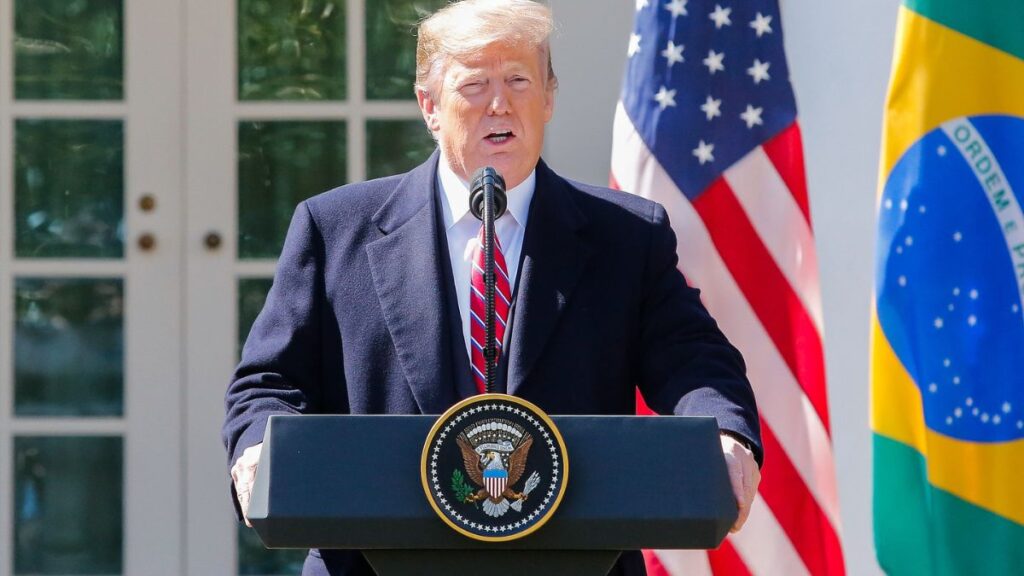
The proposal emerged amid the debate over the sector’s regulatory authority. Recently, President Donald Trump defended that the supervision of prediction markets remains under federal responsibility, a position that increased the conflict with states that try to impose their own restrictions on the activity.
According to the president of the CFTC, Michael Selig, the proposal aims to create more transparent rules for the analysis of contracts traded in these markets.
“The proposal provides a durable and transparent framework for identifying contracts that Congress has directed us to review, while allowing legitimate markets to continue to operate.”
Which contracts may be prohibited by the new proposal
The text focuses on Section 5c(c)(5)(C) of the Commodity Exchange Act. The intention is to define which categories of contracts can be vetoed by the agency. Topics considered restricted include terrorism, murder, war, gambling and illegal activities.
To evaluate each contract, the CFTC proposed a test based on three questions:
- Is the contract linked to an actual or potential event?
- Does the event fall into a restricted category?
- Does the contract go against the public interest?
The agency also proposed a flexible assessment model. In this way, regulators will be able to consider factors such as protection against risks, contribution to the formation of market prices and possible incentives for illicit activities.
If the proposal moves forward, the CFTC will open a 45-day period for public comments. Subsequently, the rule may come into force 60 days after its final approval.
How the conflict between states and the federal government evolved
The regulatory debate has gained momentum in recent months. Since April 2026, the CFTC has started to legally challenge initiatives from states such as Arizona, Connecticut, Illinois, New York and Wisconsin that seek to apply local legislation to restrict prediction market platforms.
The dispute intensified after Minnesota adopted measures that directly criminalize certain operations linked to the sector. At the same time, a coalition formed by 39 state attorneys general presented a legal statement in support of the state of Massachusetts in the dispute involving Kalshi’s sports contracts.
The group argues that part of these operations works, in practice, as betting activities without adequate supervision. According to data presented by prosecutors, bettors moved more than US$1 billion in sports contracts between January and June 2025.
In a publication made at the end of May, Donald Trump criticized state authorities who defend restrictions on prediction markets and once again defended a federal structure for the sector.
Why the proposal also raises political questions
In addition to regulatory discussions, the CFTC proposal began to face political questions in Washington. Senator Elizabeth Warren requested access to the agency’s internal documents, including communications with companies in the sector and information about recent changes to the agency’s structure
The request came after reductions in staff and a drop in the number of inspection actions registered by the commission. Warren also raised questions about possible conflicts of interest involving companies linked to the sector and members of the Trump family.
Meanwhile, concerns related to insider trading continue to attract attention from authorities. Recent cases involved bets associated with sensitive information and led platforms like Kalshi to reinforce internal control mechanisms and user monitoring.
Prediction Markets Register Strong Growth
The prediction markets sector has experienced accelerated expansion over the past few months. Segment data indicates that monthly traded volume increased from approximately US$30.6 million in January 2025 to approximately US$479.5 million in January 2026.
Currently, the total value locked in predictive market protocols is around US$500 million. The Kalshi and Polymarket platforms concentrate most of this activity.