


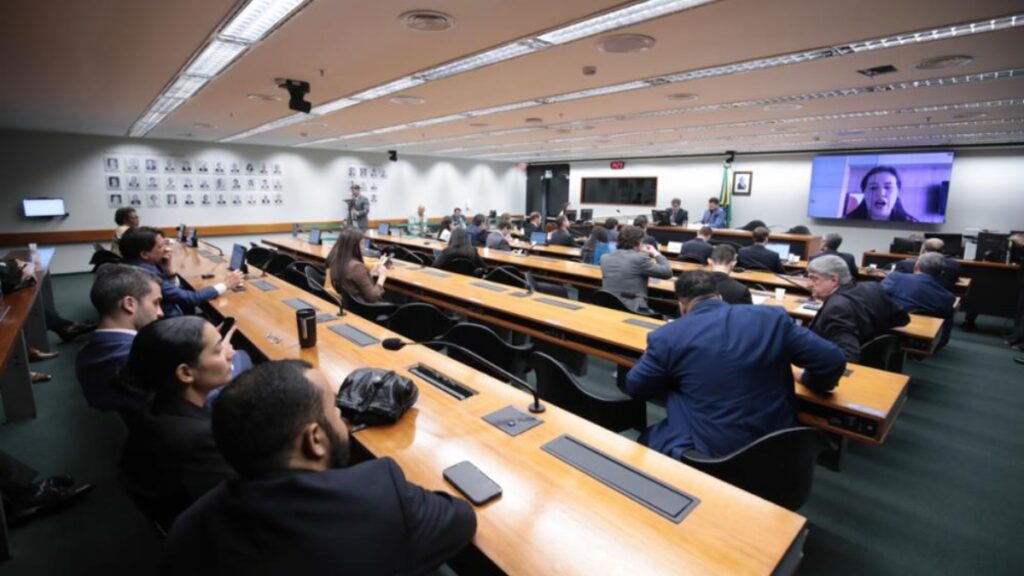
The Permanent Subcommittee on Sports Betting Regulation of the Sports Committee of the Chamber of Deputies is holding a public hearing this Wednesday (3) to discuss the collection of online bets and the financing of sports.
The debate responds to the request of the committee president, deputy Caio Vianna (PSD-RJ), and will take place from 2 pm, in plenary 4.
According to the congressman, the debate is part of the subcommittee’s work plan, approved on June 11, which includes seven thematic hearings and a roundtable to deepen discussions on the regulatory, economic, social and institutional aspects of the betting sector in Brazil.
Thus, the intention is to evaluate the prospects and challenges of sports financing in the country, focusing on the entities that make up the National Sports System and that receive resources linked to lotteries and betting.
Vianna added that the discussion seeks to propose solutions that ensure the continuity and strengthening of public sports policies, even in the face of fluctuations in revenue.
Purpose of the Permanent Subcommittee on Sports Betting Regulation
In an exclusive interview with our website, Representative Caio Vianna highlighted what the Subcommittee can do to promote a regulated and responsible sports betting and online gaming market.
“Our focus, as a Subcommittee, is to listen to the stakeholders involved (representatives of the regulated market, sports organizations, health experts, civil society, and government). From there, we can formulate solutions for the remaining gaps.”
He added: “Public hearings are crucial for gathering diverse diagnoses and perspectives. The goal isn’t to impose ready-made measures, but to build consensus that strengthens the regulated market, curbs the activities of illegal platforms, and ensures that revenues are used to provide concrete benefits to the population, including social support, sports promotion, healthcare investments, and addiction prevention policies.”
Confirmed guests:
- Antônio Hora Filho, president of the Brazilian School Sports Confederation (CBDE);
- Alim Maluf Neto, president of the Brazilian Confederation of University Sports (CBDU) (videoconference);
- Pietro Lorenzoni, legal director of the National Association of Games and Lotteries (ANJL);
- Paulo Germano Maciel, president of the Brazilian Club Committee (CBC);
- Jorge Borçato, president of the National Federation of Professional Football Athletes (FENAPAF);
- Francisco Carvalheira Neto, general coordinator of Regulation of the Prizes and Bets Secretariat of the Ministry of Treasury;
- Ricardo Nobre, legal manager of the Brazilian Olympic Committee (COB).
Waiting for confirmation:
- Representative of the Ministry of Sports;
- Representative of the Brazilian Paralympic Committee (CPB);
- Representative of the Brazilian Committee of Paralympic Clubs (CBCP);
- Representative of the National Treasury Secretariat of the Ministry of Treasury;
- Representative of the Brazilian Football Confederation (CBF);
- Representative of the Brazilian Volleyball Confederation (CBV);
- Representative of the Brazilian Basketball Confederation;
- Representative of the National Confederation of Clubs (FENACLUBES).