


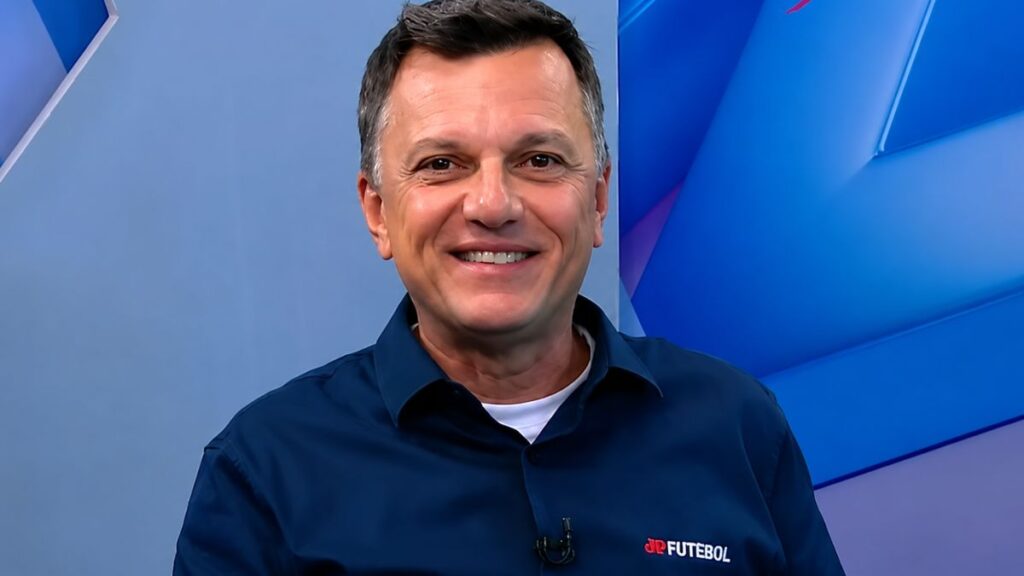
Journalist Mauro Cezar questioned the criticism directed at independent professionals who maintain commercial partnerships with bookmakers.
In a post on social media, he stated that part of the debates on the topic ignore the historical presence of companies in the sector in financing media outlets, clubs and sports broadcasts.
Mauro Cezar said he has worked for years in companies that sell advertising space for bookmakers. The journalist highlighted that, in several cases, his image, voice, content and credibility were used to facilitate advertising campaigns in the segment.
According to him, the resources obtained from betting advertisements helped finance newsrooms and pay press professionals over the last few years.
“When money from bets enters the coffers of a journalistic company, part of it pays the salaries of many journalists — including those who today vehemently criticize advertising in the sector.”
What Mauro Cezar said about betting regulation
In the publication, the journalist argued that bookmakers will continue to exist regardless of discussions about restrictions on the sector.
For him, regulation represents a more appropriate alternative than the clandestine operations of these companies.
“Understand: betting shops have existed for a long time and will continue to exist. If they are banned, they will operate underground, which is much worse. But they will not disappear.”
Mauro Cezar added that he considers it more appropriate for the market to operate under defined rules and mechanisms aimed at responsible gaming.
“It is much better, I believe, that they act legally, with clear rules and warnings of responsibility, as is already the case.”
Journalist points out different treatment between professionals and companies
During the demonstration, Mauro Cezar stated that he noticed a difference in treatment between independent journalists and large organizations that also maintain commercial relationships with betting companies.
According to him, criticism often arises when independent professionals receive sponsorship from the sector, while other forms of partnership receive less attention.
The journalist cited as examples the presence of betting advertising in sports broadcasts, sponsorship agreements signed by football clubs, contracts with athletes and former players, as well as actions carried out by entertainment personalities.
“Yes, I see a dose of hypocrisy in some reactions. Many are uncomfortable when sponsorship directly involves independent journalists, but they remain silent when large groups fill broadcasts with odds and betting advertising.”
Sponsorships from bookmakers help finance content production
Mauro Cezar also stated that the resources obtained through commercial partnerships make it possible to expand the production of independent content.
According to him, this support helps to facilitate travel, analysis and coverage that could face limitations without additional sources of revenue.
“In my case, this sponsorship allows me to produce more independent content, with travel and analysis that might not have been possible without such support.”
Upon concluding the publication, the journalist defended that independent professionals have access to the same commercial opportunities available to large communication groups.
“To make the work viable, why couldn’t independent journalists have the same type of support that large corporations have? The selectivity is great. And, in my view, unfair.”